Contact us
Leave Your Message
0%

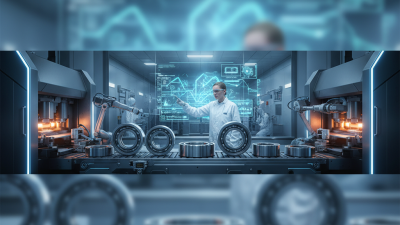
In the fast-paced world of manufacturing, getting to know the perks of Cold Forged Bearingscan really give your business a leg up. John Smith, who's pretty much a go-to guy in the industry and CEO of Advanced Bearings Inc., puts it simply: "Cold Forged Bearings bring some pretty cool benefits, like boosting productivity and helping your equipment last longer." Honestly, he really hits the nail on the head about why these components are such a big deal for buyers around the globe.

What makes Cold Forged Bearings stand out? Well, for starters, they’re tough as nails. The Forging process amps up the material's properties, so they perform reliably even under tough conditions. Manufacturers love how precise and consistent these bearings are—especially when it comes to high-speed stuff. But here’s the thing—not everyone fully gets why they’re so great. Some might shy away from the upfront costs, thinking they’re just too pricey.

That’s why it’s worth taking a moment to really think about it. Sure, Cold Forged Bearings come with some costs, but they pack a punch in terms of long-term benefits. They might not be the right fit for every single application, so it pays to evaluate your specific needs and maybe ask an expert. Investing in good quality bearings could actually save you time and hassle later on, improving your operations and cutting down on those unexpected downtimes. Picking the right stuff really can make a huge difference in how smoothly things run.
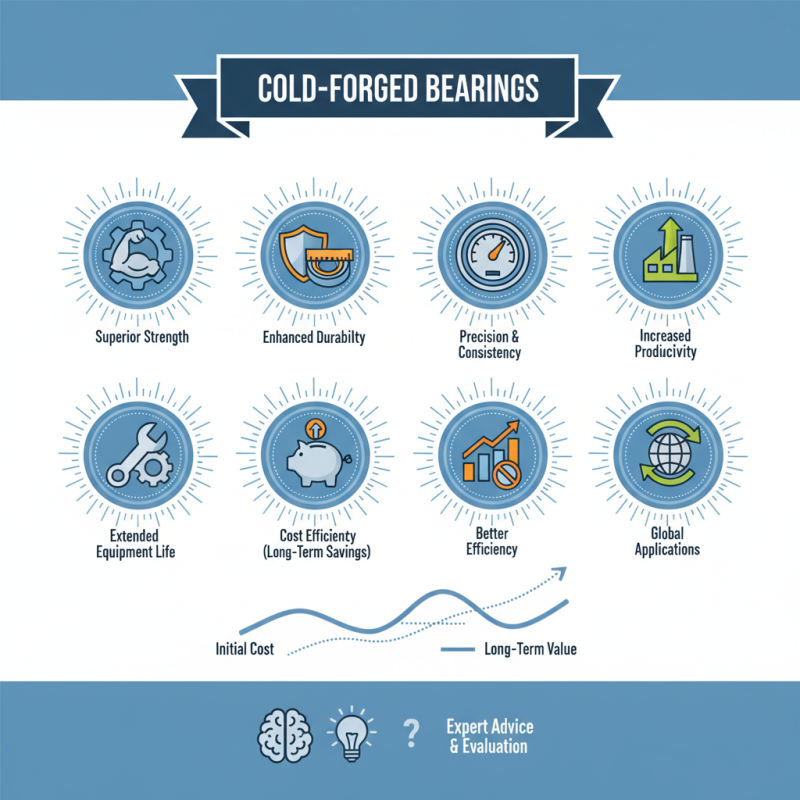
Top 10 Benefits of Cold Forged Bearings for Global Buyers?

Benefits of Cold Forged Bearings: An Overview of Key Advantages

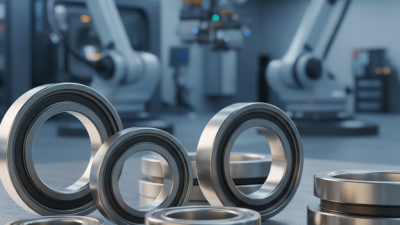
Cold forged bearings offer significant advantages to global buyers. One of the key benefits is their improved strength. This method involves shaping the metal at room temperature. As a result, the bearings maintain their structural integrity while becoming more durable. The improved grain flow leads to enhanced mechanical properties, making these bearings suitable for challenging applications.

Another notable advantage is the precision of cold forged bearings. The manufacturing process allows for tight tolerances and consistent dimensions. This precision contributes to reduced friction and wear during operation. Furthermore, cold forging minimizes waste in production. This aspect not only lowers costs but also supports sustainability efforts. Yet, buyers must consider potential initial costs. The upfront investment for cold forged bearings can be higher than other manufacturing methods. However, the long-term savings in maintenance and replacement can justify the cost.

Enhanced Strength and Durability of Cold Forged Bearings Explained

Cold forged bearings excel in strength and durability, making them a preferred choice for various applications. The cold forging process aligns the metal's grain structure, enhancing strength and resilience. This results in bearings that can withstand heavy loads and resist wear over time. The microstructure benefits from the compressive forces involved, leading to improved fatigue resistance. Such properties are crucial in settings where reliability is essential.

Manufacturers emphasize quality control during cold Forgings to ensure the final product meets strict specifications. These bearings frequently perform better under shock and vibration conditions compared to traditional bearings. However, imperfections can arise during production, underscoring the need for rigorous inspection and testing. Cold forged parts might face challenges with dimensional tolerances. Addressing these factors can improve performance in precision applications, ultimately enhancing user satisfaction.

In high-stress environments, users will benefit from the reliability of cold forged components. Understanding their unique characteristics can help global buyers make informed choices. Cold forged parts can also mitigate maintenance costs by extending service intervals. Investing in these durable solutions reflects a commitment to quality and longevity in mechanical systems.

Cost-Effectiveness: How Cold Forged Bearings Reduce Production Costs

Cold forged bearings are increasingly favored by manufacturers due to their cost-effectiveness. This process enhances material properties significantly. Research shows that cold forging can improve tensile strength by up to 30%. This strong performance directly translates to reduced failure rates and lower maintenance costs.

The initial investment for cold forged parts may be slightly higher. However, the long-term savings are substantial. According to industry reports, companies can see a 20% reduction in production costs over traditional methods. The manufacturing process is more efficient, leading to less waste and quicker turnaround times. Efficient production means fewer resources are consumed.

However, companies must evaluate the transition to cold forging carefully. Some industries may face challenges in adapting to these methods. There can be a learning curve, leading to initial inefficiencies. Moreover, not all applications may benefit equally from cold forged bearings. Yet, when correctly implemented, they offer compelling advantages that can significantly impact the bottom line.

Improved Dimensional Accuracy in Cold Forged Bearings Applications

Cold forged bearings have gained traction in various applications due to their remarkable dimensional accuracy. Industry reports show that the process of cold forging optimizes material flow. This results in superior surface finish and tighter tolerances. According to a study by the International Journal of Advanced Manufacturing Technology, cold forged components can achieve dimensional variations as low as 0.005 mm.

The dimensional stability of cold forged bearings enhances overall performance. These bearings experience reduced wear and tear in high-stress environments. A report from the American Society of Mechanical Engineers highlights that the lifecycle of cold forged bearings can exceed that of traditional bearings by 20-30%. This longevity provides significant cost savings to buyers globally.

However, the manufacturing process can face challenges. Variability in raw materials can impact final product quality. Additionally, the need for precise control and expertise in the forging process is essential. Minor inconsistencies during forging can result in flaws. These issues must be continuously monitored to ensure the reliability of the bearings. Regular testing and validation can help mitigate risks associated with dimensional accuracy in cold forged bearings.

Top 10 Benefits of Cold Forged Bearings for Global Buyers - Improved Dimensional Accuracy in Cold Forged Bearings Applications

Benefit Description Impact
Improved Dimensional Accuracy Cold forging processes yield highly precise dimensions and tolerances. Enhanced performance in machinery leading to reduced downtime.
Increased Strength Cold forging aligns the grain structure of the material, increasing its strength. Longer lifespan of bearings and components.
Cost Efficiency Reduced material waste and lower production costs due to efficient manufacturing methods. Lower overall costs for manufacturers.
Less Machining Required Cold forging produces parts close to final shape, reducing machining time. Quicker production times, faster market entry.
Higher Wear Resistance Material properties are enhanced, providing better resistance against wear. Reduced maintenance costs and improved reliability.
Uniform Density Cold forging results in consistent density across the bearing. Predictable performance in critical applications.
Reduced Production Time Faster manufacturing process compared to traditional methods. Increased throughput and efficiency.
Better Surface Finish Cold forging often results in a superior surface finish compared to other methods. Improved friction characteristics and efficiency.
Sustainability Cold forging emits fewer pollutants and uses less energy. Positive impact on company’s environmental footprint.
Improved Fatigue Resistance Enhanced structural integrity reduces failure rates under cyclic loads. Increased safety in demanding applications.

The Role of Cold Forging in Increasing Bearing Lifespan and Reliability

Top 10 Benefits of Cold Forged Bearings for Global Buyers?

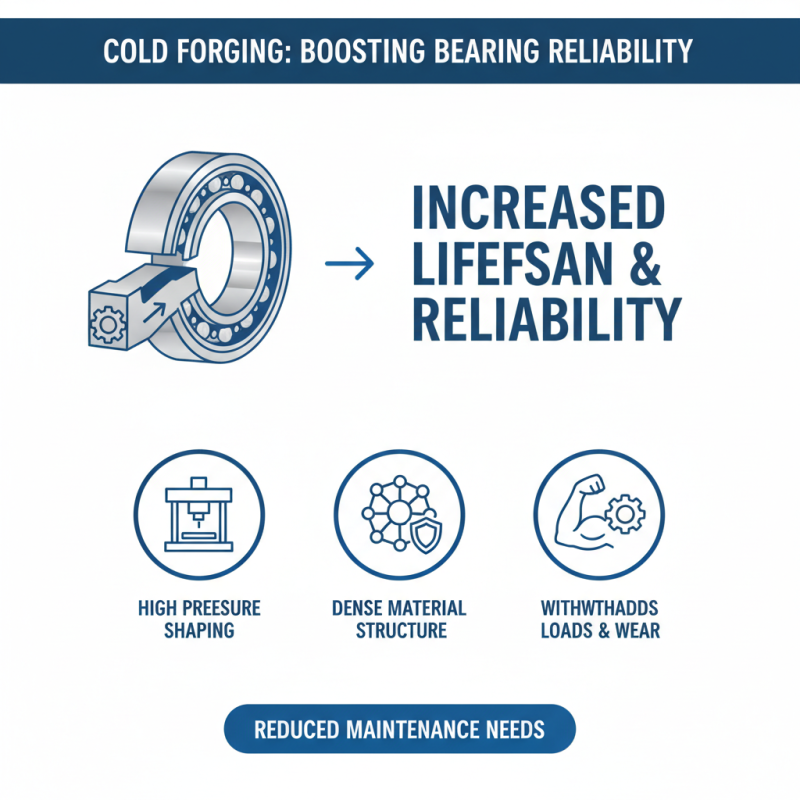
Cold forging is an advanced process that can significantly enhance the lifespan and reliability of bearings. This method uses high pressure to shape metal, creating a dense material structure. The result is a bearing that can withstand greater loads and resist wear more effectively. Users often report reduced maintenance needs with cold-forged parts compared to traditionally manufactured ones.

An important aspect of cold forging is its precision. The process limits the amount of waste material, which leads to cost savings for manufacturers. This efficiency is vital in high-demand environments where performance is critical. However, it's essential to recognize that not all applications benefit equally from cold-forged bearings. Some scenarios may still require traditional manufacturing methods.

Cold-Forged Or Cold-Extruded Wheels demonstrate exceptional durability. When tested under extreme conditions, they often outperform their counterparts. Companies relying on these bearings often find unexpected challenges, such as the need for better lubrication in harsh environments. Embracing cold forging requires a thoughtful approach to material selection and application to maximize its benefits.

Material Efficiency: Reduced Waste in Cold Forged Bearing Manufacturing

Cold forging is gaining attention due to its material efficiency. This process significantly reduces waste during the manufacturing of various components, including cold-forged bearings. By shaping materials at room temperature, it minimizes scrap and ensures every bit of raw material is utilized effectively. In a world focused on sustainability, such practices are increasingly valuable.

The process of creating Cold-Forged Or Cold-Extruded Bushings involves precision and skill. It allows manufacturers to produce parts that require less machining and finishing. This not only lowers material waste but also cuts down energy consumption throughout the process. However, the technique demands high-quality materials to ensure a successful outcome. Inconsistent materials can lead to defects, uneven wear, or reduced lifespan of the bearings.

While cold forging presents many advantages, it is not without challenges. Ensuring the integrity of the materials used is critical. Improperly sourced materials may compromise the final product, despite the efficiency of the method. Therefore, thorough quality checks must be in place to guarantee reliable, high-quality components. Balancing efficiency with quality control is a crucial step for manufacturers in this evolving industry.

Top 10 Benefits of Cold Forged Bearings

This chart illustrates the material efficiency and waste reduction benefits of cold forged bearings in manufacturing, showcasing various dimensions including performance, resource usage, and environmental impact.

Market Trends: Adoption of Cold Forged Bearings in Global Industries

Top 10 Benefits of Cold Forged Bearings for Global Buyers?

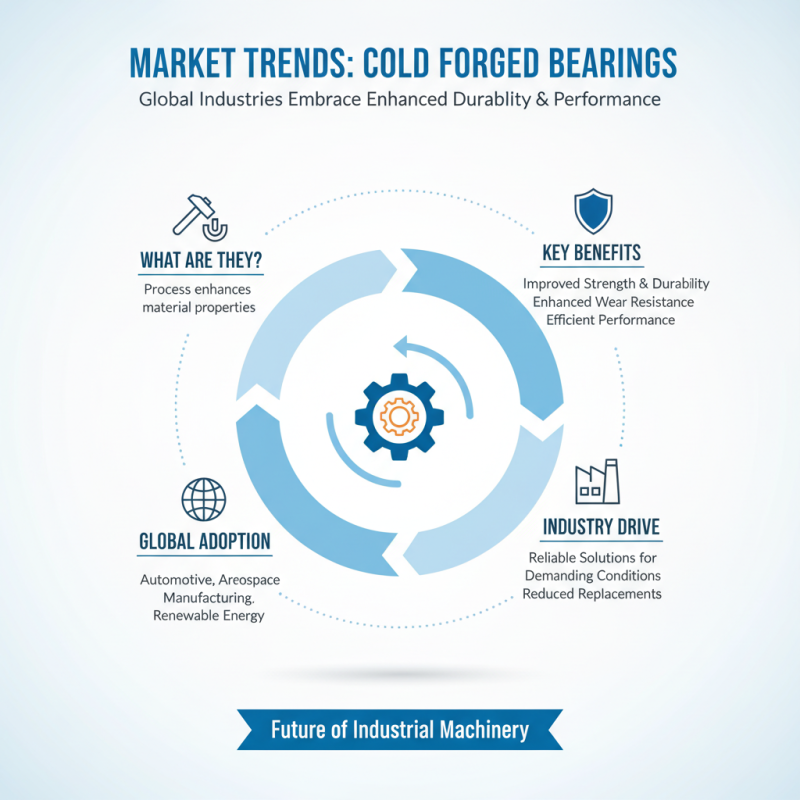
The rise of cold forged bearings marks a significant trend in various global industries. These bearings offer improved strength and durability compared to traditional options. They are made through a process that enhances material properties, leading to efficient performance. This transition is driven by industries seeking reliable solutions under demanding conditions. Enhanced wear resistance is one key benefit. It ensures machinery operates smoothly, reducing the need for frequent replacements.

Adoption of cold forged bearings is visible in automotive and aerospace sectors. These industries prioritize high-performance components. The lightweight nature of cold forged parts is also beneficial. It contributes to fuel efficiency and overall performance. Manufacturers are increasingly aware of the importance of precision in their components. The shift to cold forging reflects a commitment to quality.

Despite these advantages, challenges remain. Not all manufacturers are equipped for cold forging technology. The initial cost may deter some buyers. However, the long-term benefits often outweigh these concerns. Investing in cold forged parts can enhance productivity and reduce lifecycle costs. As awareness grows, more businesses will likely explore the potential of other cold forgings to stay competitive.

Analyzing the Impact of Hot-Forged Automotive Internal and External Ball Cages on Performance and Durability: Insights from Recent Industry Reports

Hot-forged automotive internal and external ball cages are vital components in ball bearing assemblies, significantly influencing vehicle performance and durability. These precision-engineered parts, often termed retainers, are crucial for maintaining the spacing of respective bearing balls, thereby facilitating smooth rotation with minimal friction. According to industry reports, the advent of hot-forging techniques has revolutionized the production of these cages, offering enhanced mechanical properties that cater to high-performance automotive applications. This is particularly important in systems subject to varied temperature and pressure conditions, where optimal strength and longevity are paramount.

Recent studies indicate that hot-forged ball cages exhibit superior durability, demonstrating a resistance to wear that extends their operational lifespan. For instance, in comparative analyses, hot-forged cages have shown up to a 30% increase in fatigue resistance compared to their cold-forged counterparts. This improvement translates not only into better performance but also into lower maintenance costs for vehicles, enhancing overall drivetrain reliability. The adaptability of these components allows them to perform effectively in both passenger cars and heavy-duty commercial vans, underscoring their importance in modern automotive engineering.

Furthermore, as the automotive industry evolves towards performance-driven design, the role of hot-forged ball cages cannot be overstated. They are pivotal in systems requiring precise motion control, such as wheel hubs and transmission assemblies. Industry insights reveal that components using hot-forged cages can reduce friction losses by approximately 15%, making them indispensable for achieving fuel efficiency and optimizing engine performance across various automotive applications. This confluence of durability, performance, and efficiency firmly establishes hot-forged internal and external ball cages as critical elements in the advancement of automotive technologies.

FAQS

: What are the main benefits of cold forged bearings?

: Cold forged bearings offer improved strength, precision, and reduced waste, making them durable and efficient for various applications.

How does cold forging affect production costs?

Cold forging can lead to a 20% reduction in production costs over traditional methods due to enhanced material properties and efficient manufacturing.

What is the significance of dimensional accuracy in cold forged bearings?

Cold forged bearings achieve high dimensional accuracy, with variations as low as 0.005 mm, improving performance and reducing wear in high-stress environments.

Are cold forged bearings suitable for all applications?

Not all applications benefit equally from cold forged bearings. Some industries may face challenges in adapting to this manufacturing method.

What challenges might arise with cold forging?

Variability in raw materials and minor inconsistencies during forging can impact product quality. Continuous monitoring is crucial for ensuring reliability.

Is the initial investment for cold forged bearings higher?

Yes, the initial investment may be higher than other methods, but long-term savings on maintenance and replacement can justify the cost.

How does cold forging improve material properties?

Cold forging significantly enhances tensile strength, potentially improving it by up to 30%, which leads to lower failure rates.

What factors can affect the performance of cold forged bearings?

The need for precise control in the forging process and the quality of raw materials can greatly influence the performance of cold forged bearings.

Can cold forged bearings offer sustainability advantages?

Yes, the cold forging process minimizes waste, supporting sustainability efforts while also lowering production costs.

What must companies consider when adopting cold forging methods?

Companies should evaluate potential challenges, such as the learning curve and initial inefficiencies during the transition to cold forging.

Conclusion

Cold forged bearings offer numerous advantages that make them an appealing choice for global buyers. These bearings are known for their enhanced strength and durability, which result from the cold forging process, allowing them to withstand higher loads and prolonged use. Additionally, cold forged bearings present a cost-effective solution by reducing production costs through material efficiency and minimized waste during manufacturing. Their improved dimensional accuracy further ensures optimal performance in various applications.

Moreover, the cold forging technique contributes to increased bearing lifespan and reliability, making these bearings a preferred option in diverse industries. As market trends indicate a growing adoption of cold forged bearings, their benefits become increasingly relevant for buyers looking to invest in high-quality and reliable bearing solutions. Overall, cold forged bearings not only meet but exceed the expectations of modern manufacturing and engineering needs.
Liam

Liam

Liam is a dedicated marketing professional at Shaanxi Brilliant Machinery Co., Ltd., where he plays a pivotal role in promoting the company's vision of becoming a global benchmark for manufacturing excellence. With a deep understanding of the mechanical parts industry, Liam is committed to......
Previous How to Choose High Quality China Copper Extrusion Parts Suppliers?